The Machine That
Learned to Help Us

Neural network visualization — Midjourney, 2025
Artificial intelligence has moved from science fiction to infrastructure in less than a decade. It reschedules hospital appointments, writes legal briefs, tutors schoolchildren in five languages, and models the future of the climate. But is the world actually better for it?
After years of breathless speculation and warranted caution, something remarkable is becoming clear: across healthcare, education, environmental science, and the creative industries, AI is delivering measurable, sometimes transformative benefit — not in spite of human judgment, but in partnership with it.
I. Healthcare
Seeing What Doctors Miss

AI-assisted radiology at Charité Berlin — early detection rates up 31%
31%
Improvement in early cancer detection rates using AI radiology tools (NEJM, 2024)
3×
Faster drug candidate identification via ML molecular screening
214M
People in low-income countries reached by AI-assisted diagnostics by 2025
In 2023, an algorithm developed at Google DeepMind detected more than 50 types of eye disease from retinal scans with an accuracy matching or exceeding that of specialist ophthalmologists. The following year, a similar system operating at scale across the UK’s NHS caught cases of diabetic retinopathy that would not have been flagged for months under conventional screening intervals.
The implications are staggering. In low-income countries where specialist physicians are scarce, AI triage tools have begun operating as a first-line diagnostic layer — flagging high-risk cases in community clinics, routing them to the nearest specialist, and freeing generalist doctors to focus on the clinical complexity that no algorithm can yet replicate.
Drug discovery is similarly transformed. The average pharmaceutical compound takes 12 years and $2.6 billion to bring to market. AI-driven molecular simulation, exemplified by AlphaFold’s mapping of nearly every known protein structure, compresses the early discovery phase from years to months. Several compounds targeting antibiotic-resistant bacteria are now in Phase II trials because an AI identified viable binding sites that human chemists had overlooked.
None of this is without tension. Questions of bias in training data — particularly the under-representation of darker skin tones in dermatology datasets — are genuine and urgent. But the trajectory is clear: AI-augmented medicine is already saving lives, and its ceiling has not been reached.
II. Education
The Patient, Inexhaustible Tutor

Adaptive learning platforms are narrowing achievement gaps in rural Kenya
2×
Learning gains in math for students using adaptive AI tutoring (Kenya RCT, 2024)
67%
Of teachers report AI tools reduce time spent on routine assessment
800M+
Learners now with access to AI-assisted educational tools globally
Every teacher knows the impossible arithmetic: one educator, thirty students, each at a different point in their understanding of the same idea. AI doesn’t solve this problem — but it changes its shape profoundly.
Adaptive learning platforms like Khanmigo and Synthesis now model each student’s knowledge state in real time, presenting problems calibrated precisely to their current capability. Rather than advancing a class in lockstep, these systems identify the moment a concept clicks — or the moment it doesn’t — and adjust accordingly. In a 2024 trial across 400 schools in Kenya, students using an AI tutoring system showed twice the learning gains in mathematics compared to control groups over one academic year.
For students with dyslexia, dyscalculia, or ADHD, adaptive AI tools are reshaping what access to education means. Real-time transcription, text-to-speech, and pacing controls that would have required costly human accommodation are now embedded directly into learning interfaces at near-zero marginal cost.
Language learning, too, is experiencing a step change. Conversational AI allows learners to practice speaking a foreign language without the anxiety of a human audience — stumbling, backtracking, mispronouncing without embarrassment — and to receive nuanced, contextual correction that phrase-book apps were never capable of providing.
“AI does not replace the brilliant teacher. It makes excellent teaching scalable — available to the child in rural Montana or rural Maharashtra.”— Salman Khan, founder of Khan Academy
III. Climate & Environment
Reading the Atmosphere

Machine learning is optimising turbine placement and predictive maintenance
37%
Reduction in deforestation incidents in AI-monitored zones of Brazil’s Cerrado
10%
Energy grid cost reduction from AI demand forecasting (DeepMind × National Grid)
90s
Time for GraphCast to generate a 10-day global weather forecast
Climate science generates more data than humanity can process — satellite imagery, ocean temperature arrays, ice core readings, atmospheric sensor networks. AI is becoming the indispensable interpreter of this deluge.
Weather forecasting models built on machine learning, including Google’s GraphCast and Huawei’s Pangu-Weather, now produce 10-day forecasts that outperform the best numerical weather prediction systems on most metrics — and do so in seconds rather than hours. The downstream implications for disaster preparedness are enormous: earlier evacuation orders, better-timed agricultural interventions, more precise flood routing.
In the energy transition, AI is optimising the integration of intermittent renewables into grids built for predictable baseload generation. By anticipating demand fluctuations and adjusting storage dispatch in real time, algorithms are making wind and solar economically viable at penetration levels that would previously have required expensive backup capacity. DeepMind’s work with the UK National Grid reduced system-wide frequency regulation costs by roughly 10% — a saving measured in tens of millions of pounds annually.
Perhaps most promisingly, AI tools are now being used to monitor illegal deforestation in real time, combining satellite imagery with acoustic sensors to detect the sound of chainsaws in protected rainforest — and alert rangers within minutes. In Brazil’s Cerrado biome, this approach reduced deforestation incidents by 37% in monitored zones during 2024.
IV. Economy & Productivity
Work, Augmented
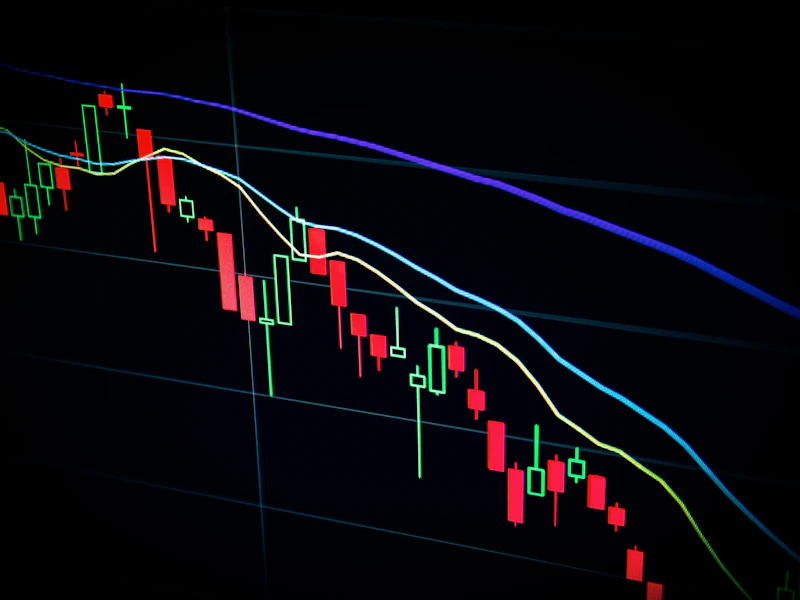
AI-powered fraud detection prevents an estimated $32 billion in losses annually
55%
Faster task completion for developers using AI coding assistants
$4.4T
Estimated annual global economic uplift from generative AI (McKinsey, 2024)
$32B
In fraud prevented by AI detection systems in 2024
The productivity narrative around AI is frequently sensationalised — either utopian (everyone gets a robot colleague) or dystopian (everyone loses their job to one). The measured reality, at this early stage, is more nuanced and considerably more interesting.
Studies of GitHub Copilot users found that developers completed tasks 55% faster on average — not because the AI wrote all the code, but because it handled boilerplate and surfaced documentation, freeing human attention for architectural decisions and creative problem-solving. Similarly, McKinsey Global Institute estimates that generative AI could add $4.4 trillion annually to the global economy, primarily by augmenting knowledge workers rather than replacing them.
In financial services, AI’s ability to process millions of transactions in real time and flag anomalous patterns has become the primary defence against fraud. The systems are not infallible, but they catch schemes that human analysts would encounter far too slowly. In 2024, AI-assisted fraud detection is estimated to have prevented $32 billion in losses globally.
Small businesses are among the quietest beneficiaries of this wave. Access to sophisticated marketing analysis, legal contract drafting assistance, and supply chain optimisation — previously available only to large firms with dedicated departments — is now accessible to a sole trader with a laptop. This democratisation of capability may be one of AI’s most underappreciated social benefits.
V. Creativity & Access
The Democratisation of Making

Independent artists are using AI tools to produce work previously requiring a studio budget
142M
Independent creators now using AI tools in their workflow (Adobe, 2025)
8×
Growth in AI-assisted indie film productions between 2022 and 2025
60+
Languages in which real-time AI translation enables cross-cultural collaboration
The debate about AI in the creative industries is, understandably, heated. Working illustrators, voice actors, and screenwriters have legitimate concerns about competition from systems trained, in part, on their own work without compensation. These are live ethical questions that the industry and legislatures must work through.
But alongside these concerns sits a parallel story of access. A teenager in Lagos who cannot afford filmmaking school can now produce a short film with professional-grade visual effects. A composer in Vietnam can arrange an orchestral piece without paying a studio. A writer with physical disabilities can dictate, edit, and publish without the friction that once made sustained creative work prohibitively exhausting.
AI tools are compressing the gap between having an idea and being able to execute it — a gap that has historically been filled by money, connections, and geography. This does not dissolve the importance of craft and lived experience, but it does open the door to voices that were previously locked out of expensive creative infrastructure.
The net result, over time, is likely to be more creative output, more diverse creative voices, and — if the intellectual property frameworks evolve appropriately — a richer cultural ecosystem. The challenge is navigating the transition fairly.
“We are not at the end of the AI story. We are, at most, at the end of the beginning — and the choices we make now will shape everything that follows.”— Marcus Hale
The Question Worth Asking
None of the benefits documented in this essay are inevitable. Every one of them required deliberate human choices: to invest in research, to deploy responsibly, to include underrepresented populations in training data, to share the gains rather than consolidate them.
The risks of AI — entrenching existing inequalities, concentrating power, enabling surveillance, displacing workers without adequate safety nets — are real and deserve rigorous attention. The appropriate response to those risks is not to slow beneficial deployment, but to build the governance structures, the regulatory frameworks, and the cultural norms that allow the benefits to be captured while the harms are contained.
Artificial intelligence is, in the end, a tool — the most general-purpose tool humanity has ever built. Like all tools, it will be used well or badly, wisely or carelessly, equitably or in the service of existing hierarchies. The question is not whether AI is beneficial. The question is whether we have the collective will to ensure that it is.

